 Chat to a clinician
 Find a centre
 Emergency assistance
 Donate now

Mental health is about how we think and feel, and influences how we act. It includes our emotions and how we cope with life's ups and downs. Everyone has mental health, just like we all have physical health. Our mental health is shaped by many things - our experiences, culture, family, identity, and community.
Mental health difficulties happen when our thoughts, feelings, or behaviours become hard to manage and start to impact our daily life. This can look different for everyone - it might be feeling really low, anxious, overwhelmed, numb, or finding it hard to sleep, eat, focus, or connect with others.
One way to think about mental health is to consider it on a spectrum from mentally healthy to mental illness.
Let's explore the mental health spectrum.
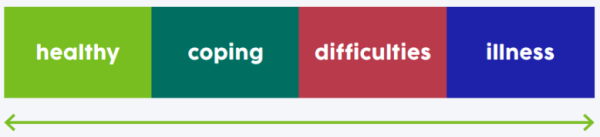
Mental health spectrum
Mental health spectrum
Healthy
This means you feel able to work and study, feel connected to others, be involved in activities in your community and ‘bounce back’ when life’s changes and challenges come along.
Coping
This is when people feel some pressure but are doing OK.
Difficulties
This is where people might feel like they aren’t doing so well.
Mental illness
This is a broad term that refers to a group of conditions like anxiety, depression or others. These can significantly affect how a person feels, thinks, what they do and interactions with others. Almost half the population will experience a mental illness at some point in their lives.
Understanding Mental health difficulties
Everyone can experience the signs and symptoms of mental health difficulties from time to time. It’s common for people to have times in their life when their sleep, mood, motivation or energy are not going as well as they would like.
If these signs and symptoms are happening for a few weeks or more and are starting to have a bigger impact on things like relationships, or work and study, it’s a sign that you might be heading towards the difficulties area of the spectrum.
If you’ve noticed these sorts of changes, it’s important to look after yourself, learn a bit more about what’s happening for you, and enlist the support of family and friends. By finding the right support and strategies, things can get better.
We acknowledge that language and understanding around mental health is shaped by many things including faith, culture and community. You might be interested in checking out our resources that explore mental health and help seeking from a multicultural perspective.
We also have fact sheets translated in a number of languages.
Download our fact sheet on mental health difficulties and when to seek help
(PDF 596kb)

Signs and symptoms of mental health difficulties:
- not enjoying, or not wanting to be involved in things that you would normally enjoy
- changes in appetite or sleeping patterns
- feeling sad or ‘down’ or crying more often
- being easily irritated or having problems with friends and family for no reason
- finding that you aren’t performing at school, TAFE, university or work like you used to
- being involved in risky behaviour that you would usually avoid, like taking drugs or drinking too much alcohol, or depending on these substances to feel ‘normal’
- having trouble concentrating or remembering things
- having negative, distressing, bizarre or unusual thoughts
- feeling unusually stressed or worried
- feeling things have changed or aren’t quite right.
Contributors to mental health difficulties:
There are a number of things that might contribute to mental health difficulties and these are often out of our control. Things like:
-
current circumstances: such as stress at school or work, money problems, difficult personal relationships, or problems within your family
-
difficult life experiences: abuse, neglect, or the loss of someone close to you
-
individual factors: coping skills and thinking styles
-
biological factors: family history of mental health difficulties

Looking after your mental health
There are a number of things you can do to look after and maintain your mental health and wellbeing. As a start, incorporate the tips for a healthy headspace into your everyday routine. This will leave you more prepared to cope with the challenges you face in your everyday life. These include:
-
get into life
-
create connections
-
learn skills for tough times
-
eat well
-
stay active
-
get enough sleep
-
cut back on alcohol and other drugs
When and where to seek help
If you are experiencing mental health difficulties, it’s important that you reach out to a trusted friend, family member, teacher or Elder to share what you are going through. Or you can get in touch with your local headspace centre or use our online or phone-based service at eheadspace.
If you ever feel unable to cope because of overwhelming or intense emotions, or if you have any thoughts of harming yourself, then ask for help immediately.
For immediate help contact: triple zero (000) if it is an emergency
National 24/7 crisis services
- Lifeline: 13 11 14
- Suicide Call Back Service: 1300 659 467
- Beyond Blue: 1300 224 636
Additional youth support services
- headspace: Find your nearest centre or contact eheadspace, our phone and online service (12-25 years)
- Kids Helpline: 1800 55 1800 (5-25 years)
- ReachOut (under 25 years)
- SANE Australia: 1800 187 263 (18+ years)
The headspace Clinical Reference Group oversee and approve clinical resources made available on this website.
Last reviewed December 2025.
Get professional support
If you feel you need help there are a range of ways we can support you.